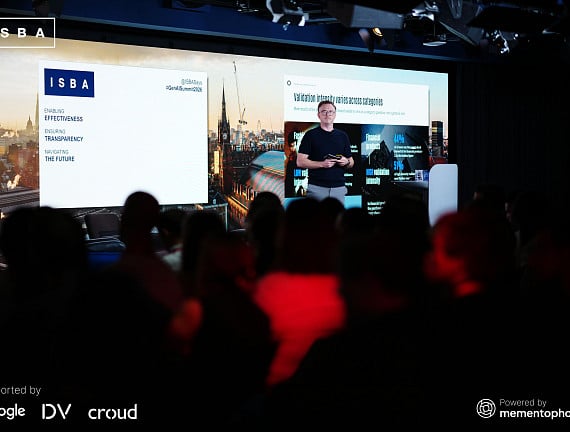
As AI has evolved over the last few years, the search landscape has shifted quickly, with visibility across LLMs and other emerging platforms being at the forefront of many marketing conversations. After two days at BrightonSEO UK, which were undoubtedly filled with jam-packed talks, networking, and ice cream, here are my key takeaways from one of the most anticipated annual SEO conferences.
Build a Content Strategy Around Real Human Experiences
Demand-led content should be at the forefront of our strategy, as there is a saturation of content that already exists. Chima Mmeje (Senior Content Marketing Manager at Moz) discussed how important it is to create a content strategy based on where your audience actually spends their time. We need to focus on a story-led approach and a first-person perspective. I found this session insightful on how real human perspectives can help you position yourself as a thought leader.
Mmeje’s approach to using AI to support content execution really shows how we can utilise AI to help simplify content strategy. Having a fully AI-proof content strategy will help make it easier when repurposing content for different platforms, as each platform has a different audience. It is important to diversify your reach so that you are not missing out on reaching your audience across different platforms.
Key takeaway: Use AI to support the execution, but ensure you repurpose the content across multiple formats to diversify reach.
Own the Data to Own Your Visibility in AI Search
Data-driven content is often what AI overviews favour and show users. The synergy between Digital PR and SEO is important, now more than ever. In Rebecca Peel’s (Head of Digital PR at Tank) talk on the importance of Journalism in AI, she sharedIf you own the data, you own the visibility.” In other words, original and data-backed content is what helps brands build a strong narrative and lead in their industry. Users are after genuine expertise, named voices that they can trust, rather than low-quality, AI-written content.
Key takeaway: Digital PR and journalism are the "ground-truth layer" for AI. If you want visibility, you have to be the source.
Guide Consumer Decisions by Minimising Website Overload
Psychology undoubtedly plays a role in consumers' decision-making, whether they click through to your website or are making a purchase. In Lottie Namakando’s (Director of Behavioural Science and Innovation at Reflect Digital) session, she explained that consumers make decisions emotionally but then justify them rationally. This means your site needs to be easy to navigate, to avoid consumers losing their emotional connection to the product or service they were looking to purchase. It is important to design your website for a cognitive load, which essentially means reducing any distractions, removing pop-ups, and avoiding long, dense paragraphs. In reality, no one will read all of that.
Lottie also highlights the importance of word triggers such as ‘near me’, ‘now’, or ‘today’ to show urgency, ‘cheap’, ‘free’, ‘discount’ for risk aversion, and finally ‘easy’, ‘quick fix’, ‘how to’ to highlight stress and anxiety relief. It is important to look at how the words used play a role in encouraging consumers to make a decision.
The key takeaway: Make it a habit to complete a ‘cognitive friction audit’ on high-impact pages to check for jargon, long paragraphs and confusing navigation.
Shift Your Focus from Keywords to LLM Visibility
To tie the technical side of things together, Judith Lewis’s (Founder of Decabbit Consultancy) session on LLM visibility challenged how success is measured in this new era for SEO marketers. For so long, we have prioritised keyword rankings, but Judith highlighted that we need to shift our focus to metrics that actually matter in an AI-driven search landscape. She stressed the importance of looking into other avenues, like conversions by channel, brand awareness, profitability, and how accurately LLMs reference our brands.
Her breakdown of how LLMs process our content by chunking and tokenising it was particularly insightful, as it was a great reminder that good old-fashioned technical SEO is still alive and is very essential. Elements like schema markup, solid internal and external linking, and lightning-fast page speeds are exactly what search engines and AI bots need to find and contextualise your website.
Key takeaway: AI absolutely hates a slow website, so prioritise technical SEO and ensure your website is easy to find.
To Conclude
Whilst AI is changing how users discover brands, buy products and consume content, they still care for real, human-written content. It may seem as though AI is taking over and making it difficult for us to rank organically, but marketers need to adapt to the changes and ensure they do not stray from good-old SEO. User psychology, brand authority, and human-led storytelling are what ultimately allow users to find our brands.