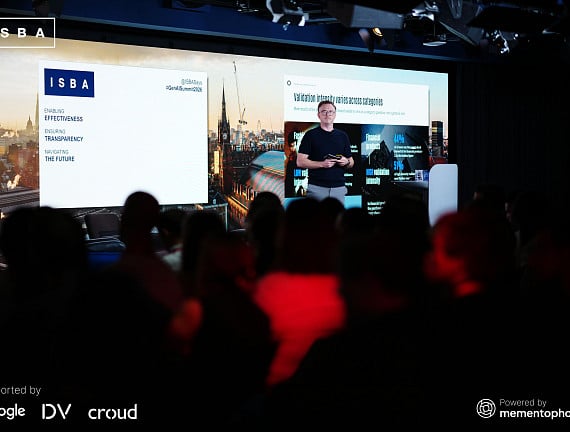
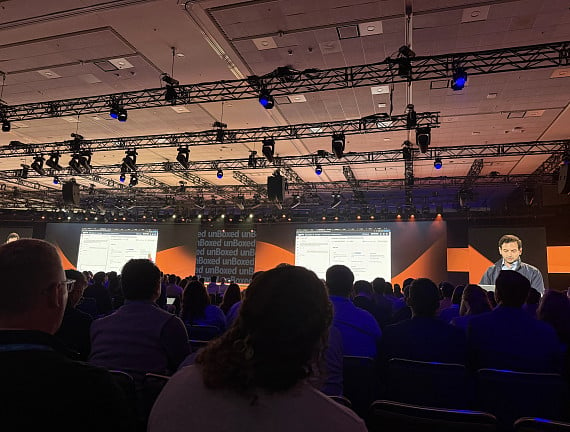
At Retail Media Pioneers 2026, our Head of Retail Media, Beth Mercer, sat down with the IAB's Marie-Clare Puffett to take on one of the industry's most stubborn myths: that retail media is simply a conversion tactic.
Over the session she made the case for retail media as a full-funnel, brand-building channel, unpacked how AI is rewriting product discovery, and tackled the measurement “trust gap” head on. Here are the highlights.
From “brand tax” to brand builder
Retail media has an image problem. As Beth put it, plenty of people still write it off as a “brand tax” — something you pay just to get through the door. She thinks that view is both misguided and out of date.
It's true that a lot of brand spend still sits in lower-funnel formats like Amazon sponsored ads, effectively mopping up demand that upper-funnel channels worked hard to create. But the networks with a genuine full-funnel offering are now serious brand builders in their own right. The real barrier, Beth argued, isn't the channel; it's the org chart. When brand, marketing and sales teams sit in separate silos, it's difficult to tie retail activity back to a single objective and make it work as hard as it should.
The data is the real unlock
Beth's central argument for pushing retail media further up the funnel came down to data. Amazon and the major retailers hold extraordinary depth on shoppers — not just what they've bought from your brand, but from your competitors, from adjacent categories, even what they're watching. More often than not, they know your customer better than you do.
Activated through clean rooms and fed into brand-building work, those signals are exactly what lift retail media beyond a bottom-of-funnel tactic. It's that closed-loop, clean-room measurement that turns rich shopper data into something brands can actually act on.
Discovery has shifted: Welcome to the Validation Economy
To show how quickly the discovery landscape is shifting, Beth drew on Croud's proprietary research, the latest edition of the Croud Consumer Index. The headline: 74% of AI users now turn to LLMs before choosing a product. Sponsored-ad impressions are falling year on year, particularly in the US, but engagement, click-through and conversion on the visibility that remains have all improved, so traffic and revenue keep growing. Discovery, in other words, is happening elsewhere.
Crucially, the research found that more than 40% of those users still validate what AI tells them, heading to reviews, Reddit, Instagram and product pages before they buy. We call this the Validation Economy: the space between an AI recommendation and the purchase, where trust is won or lost.
The lesson for brands is clear. It's not enough to win the LLM recommendation or the top of retail search. When a shopper reaches the point of discovery, your brand needs to have already done the work higher up the funnel, and kept its message alive through the validation layer. For a Croud client like NEOM, a basic journey today might look like: someone sees a streaming ad for a NEOM candle > an LLM rates the ingredients when they start exploring options > the Amazon reviews back it up > purchase made.
Closing the measurement trust gap
If discovery is the opportunity, measurement is the headache - and this was a key focus of Beth’s session. Industry studies suggest more than 60% of advertisers are dissatisfied with retail measurement: retailers “marking their own homework”, little transparency, and walled gardens that keep data siloed. The result is cross-retailer blind spots that cause brands to undercount the upper-funnel work that's actually driving results.
Beth brought this to life with a Croud client, Every Man Jack, a men's personal care brand sold across Walmart, Target, Kroger, Amazon and its own D2C site. When a stock issue temporarily diverted supply to a single retailer, loyal D2C shoppers switched channels overnight. Read in isolation, that retailer looked like it had won a wave of new customers, when really those buyers were simply following the stock. Without a cross-channel view, it's an easy story to misread.
Making the invisible visible
Beth's prescription is to stop treating any one dataset as the full picture. At Croud, that means stitching together first-party data (anonymised, hashed and plugged into Amazon Marketing Cloud (AMC)), marketing mix modelling and clean-room signals to build a clearer — if not yet crystal-clear — view of what's working.
She was also keen to bust a myth about Amazon Marketing Cloud. Its old reputation as an intimidating SQL box is out of date: AMC now leans on plain-English querying that answers the questions brands and boards are actually asking: what did my DSP campaign do for sales, what was the path to purchase, where did my campaigns overlap? Her advice to anyone put off by the complexity of the ecosystem was simply to log in and explore. Retailers themselves remain reluctant to share across walled gardens, so there's still work to do on aligning attribution windows and terminology, but the tools to piece it together are far more accessible than they were even a year ago.
On KPIs, Beth noted a clear shift from last year. Incremental ROAS still matters, but the focus now is incremental ROAS overlaid with lifetime value — acquiring customers who are both genuinely net-new and likely to grow with the brand over time.
What brands should do next
Beth left the room with three key things to take away:
- Challenge how retail media sits in your business: Retail media typically touches lots of different teams - brand, sales, marketing and beyond - so get those teams talking to each other.
- Optimise the whole funnel: Intercept the customer journey early so you're front of mind before the LLM stage, while still optimising hard at the bottom.
- Lean on clear incrementality data: Make campaign optimisation decisions on evidence, not attribution you can't see behind.
Read more
Get our guide - Retail Media's New Rules for the Validation Economy - for more on building brands and measuring true incrementality across retail media networks.
Want to talk through what this means for your brand? Get in touch with the Croud team.