Croud attended Google Marketing Live (GML) 2026 in Dublin and we’re sharing our key takeaways and how these updates will impact the way you leverage your data and Google Analytics (GA) moving forward.
It's no surprise that AI is no longer a feature, and by layering Gemini across GA, Google is evolving to bridge data silos and help marketers and analysts make smarter decisions quicker.
Ask Advisor as the unified agentic experience
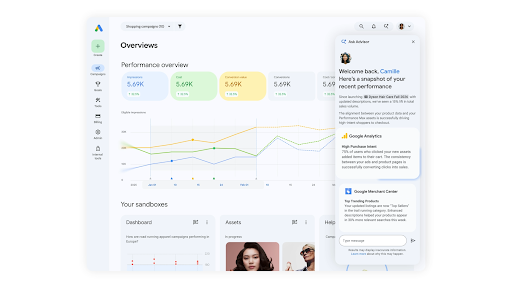
The Analytics assistant is now becoming the Ask Advisor, leveraging the latest Gemini capabilities to surface insights rather than requiring manual digging by simply asking questions. What is exciting is that Ask Advisor will now look across all Google connected platforms such as Google Ads or the Google Merchant Center to surface smarter and more relevant information. For example, you can ask Ask Advisor how a newly launched Google Ads campaign is performing and it will direct you to the correct reports in the GA UI.
Why does it matter?
Conversational analytics is shifting the role of marketers and data analysts away from lengthy data manipulation and toward faster, more strategic insight generation. As with what we have seen previously, we would love to see a section that allows us to input advertiser and brand context to provide even more relevant recommendations.
Solving data fragmentation with Data Manager & Enhanced APIs
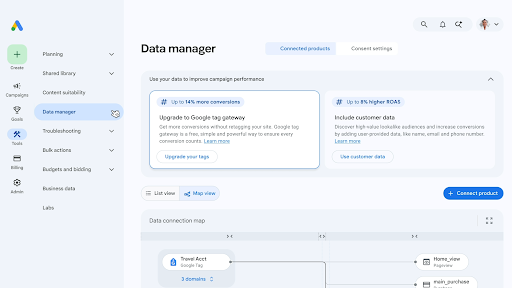
Google is rolling out an intuitive new summary of data pipelines featuring a map view in Data Manager. They also announced expanded Data Manager API access and fresh integration partnerships with third-party platforms such as Meta, Snapchat and Tiktok, as well as CRMs like Bloomreach and Adswerve.
Why does it matter?
Google’s switch to Data Manager and its API is set to make the data pipeline easier to start, manage and maintain. It removes the need to pipe data to multiple platforms by offering a centralised hub for your data. This move positions GA as a true cross-channel measurement platform by integrating impressions, clicks and cost data to provide better context for analysts and marketers. I particularly like the data flow visualisation that allows everyone to better understand data pipelines, bringing transparency and easier troubleshooting.
Maximise data signals and accuracy
AI feeds on data, and the more signals you can capture, the better outcomes you can expect for your advertising. You can do this with Google Tag Gateway (GTG) by upgrading your tags to serve from your site’s own server, in order to improve performance and resilience of your measurement signals. Google suggested GTG drives an average observed conversion uplift of 14%.
Why does it matter?
Maximising data capture and accuracy is essential in building trust and forming strong foundations for measuring marketing efforts across channels. It’s not new and we have been diving in GTG last year. However, since last year Google has launched further integration with new Content Delivery Network integrations such as Akamai, Amazon CloudFront.
If you haven’t already made the move to adopt GTG, you are missing out on valuable insights and conversions that would help you secure advertising budget and make smarter, better informed decisions.
Predictive measurement with Qualified Future Conversions and Attributed branded searches
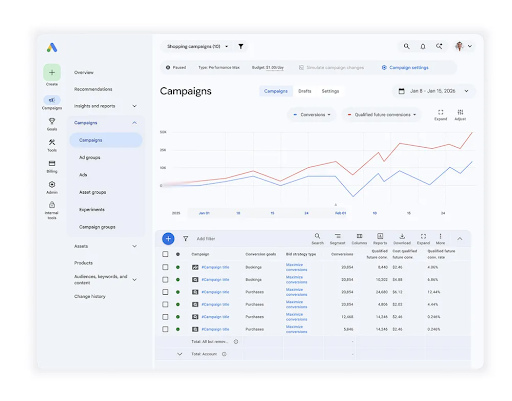
Coming later in 2026, Qualified Future Conversion is a new AI-powered metric that is set to help advertisers predict the long-term revenue impact of their upper-funnel campaigns by connecting initial ad exposure and leading user actions (like branded search or engaged visits) to expected future conversions.
Designed to help marketers gauge how demand creation influences search volume and long-term conversion rates, Attributed branded searches link brand-focused media to specific search behaviours. By connecting these dots, it acts as a fast-acting leading indicator for marketing efforts intended to expand market share and heighten brand engagement.
Why does it matter?
By essentially stretching the ad exposure window (impressions or clicks), QFC bridges the gap between “Discovery” and “Decisions”. It will help prove that the upper-funnel investments (in display, video) are leading actual conversions and revenue. This will help conversations between marketers and CFOs easier and allow them to unlock business growth and opportunities.
Attributed branded searches will allow for a more effective measurement and deliver proof of the impact of YouTube advertising. This one metric will help support marketers make a stronger case for YouTube ads. But at Croud, we go further by running Croud Experiments, our automated, AI-powered solution to measure true incrementality.
Bringing Enhanced budgeting in Google Analytics 360 with Meridian
Google is doubling down on Marketing Mix Models (MMMs) by introducing Meridian Studio on Google Cloud. This allows enterprise teams to seamlessly blend GA4 first-party signals with broader causal experiment data. This will be available to a small number of advertisers in the second half of 2026.
Why does it matter?
The goal here is bringing data and causality into a single, unified measurement playbook available in the Google Analytics UI, making it easier to access for everyone. At Croud, we believe the true value of Marketing Mix Models is in the action you take from the insight unearthed from your MMM study. If you want to explore more on this topic and speak to our experts, get in touch here.
What you need to do next
The key takeaway from GML 2026 is clear: success in the AI-driven landscape requires a dual focus. First, you must maximise signal capture through GTG. Second, you must prioritise first-party data to build a resilient foundation for both daily marketing operations and strategic, long-term decisions fueled by (Croud) Experiments and Media Mix Modeling.
Advances in conversational analytics are rapidly transforming data accessibility. It has never been simpler for individuals across all levels of an organisation to retrieve and analyse critical business information.
Finally, make sure you integrate predictive measurement powered by AI in your on-going campaign measurement, in order to show the value of your campaigns before it has turned into real actions.
If you would like to check that you have a robust data foundation and GA4 setup, get in touch with Croud’s Analytics and Data team today by reaching out here.